
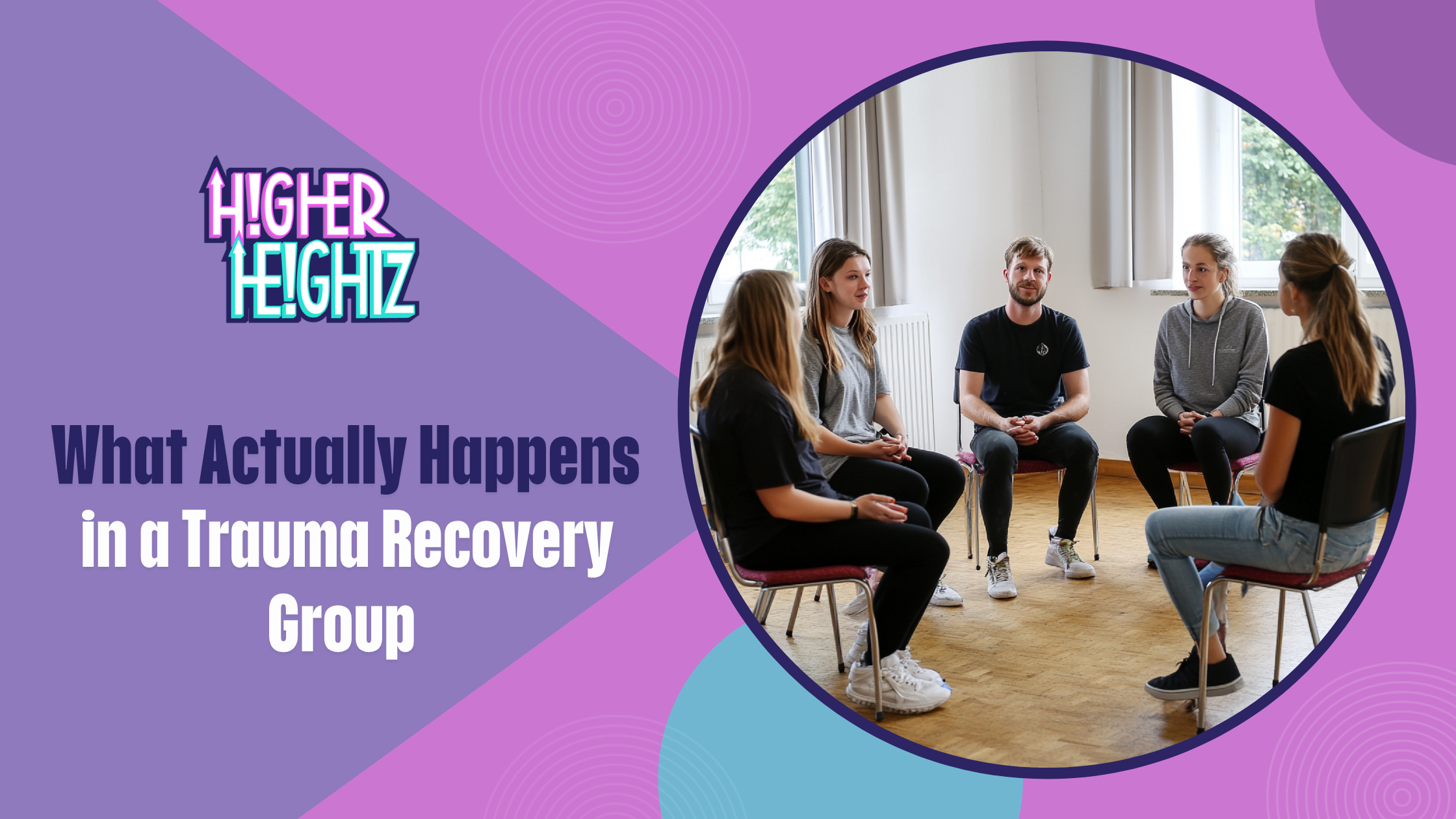
What Actually Happens in a Trauma Recovery Group
If you’ve been thinking about joining a trauma recovery group but aren’t sure what happens, here’s the reality.
Nobody Makes You Share Immediately
There’s this fear that you’ll walk in and have to tell strangers everything that’s ever happened to you.
Doesn’t work that way.
What happens:
- You listen more than you talk at first
- The facilitator explains how things run
- You share when you’re ready
- Some people take weeks to say much
The point is making it safe, not dragging confessions out of you.
It’s Not Heavy the Whole Time
Trauma recovery involves difficult topics, but decent groups don’t keep you submerged in heaviness for the full hour.
There’s laughter when someone says something relatable. Relief when you realize other people get it. Regular conversation mixed with heavier discussions.
Recovery means learning to handle things, not staying stuck in them.
You Learn Practical Skills
Groups that only do sharing without teaching you what to do with it don’t accomplish much.
Functional groups cover:
- Grounding techniques for when you’re losing it
- Spotting when your trauma responses are taking over
- Dealing with anxiety at its onset
- Acknowledging, as opposed to responding to, what you are feeling
You go away with tools that can be used, not with an acknowledgment that you are in pain.
The Facilitator Makes or Breaks It
The person running it makes or breaks the experience.
What matters:
- Knowing when to get involved and when to let things unfold naturally
- Stopping unsafe dynamics without being heavy-handed
- Noticing who’s having trouble even when they’re quiet
- Preventing one person from dominating
Bad facilitators let groups become complaint sessions. Good ones keep things productive.
You Can Stop Pretending
The relief of dropping the act surprises people.
Outside the group, you’re managing appearances, hiding struggles, keeping everything looking fine.
In group, you can say the week was terrible, admit you’re barely managing, show up exhausted. That permission matters more than most of the techniques.
Someone Will Voice Your Exact Thoughts
This always catches people off guard.
Someone describes precisely how you feel.
Getting to hear that others experience similar intrusive thoughts, patterns of shame, fear that they are permanently damaged, puts a new perspective on things.
Your responses stop seeming like personal defects.
Progress Looks Smaller Than Expected
People arrive expecting transformation. No more nightmares, sudden confidence, triggers gone.
Actual progress:
- Getting triggered but not spiraling as deeply
- Hard weeks that don’t completely derail you
- Spotting patterns you missed before
- Asking for help instead of forcing yourself through everything
Slower than you want, more lasting than quick fixes.
The Group Becomes Part of Your Week
At some point, group shifts from something you drag yourself to into something you actually look forward to.
These people end up knowing parts of your life nobody else does. They’ve seen you on bad weeks and noticed when things improved. They can tell when something’s off even if you don’t say it.
You’re probably not hanging out outside of group or texting each other daily. But while you’re showing up together, there’s something there that’s tough to put into words.
Starting Takes the Most Effort
Walking into that first session requires effort.
You’re acknowledging a problem, sitting with strangers, being vulnerable in uncomfortable ways.
Most people who show up wish they’d started earlier.
Let’s Figure This Out Together
Higher Heightz works with individuals and organizations to create trauma-informed support that functions.
Get in touch and we’ll start where you are.
FAQs
How long do people typically stay?
Some find what they need in months. Others stay over a year. There’s no required timeline, stay as long as it helps.
What if I’m not ready to discuss details?
You don’t need to share your story to benefit. People participate by listening, learning skills, and connecting without disclosing everything.
Do I need a diagnosis?
Most groups don’t require formal diagnosis. If trauma is affecting your life, that’s sufficient.