
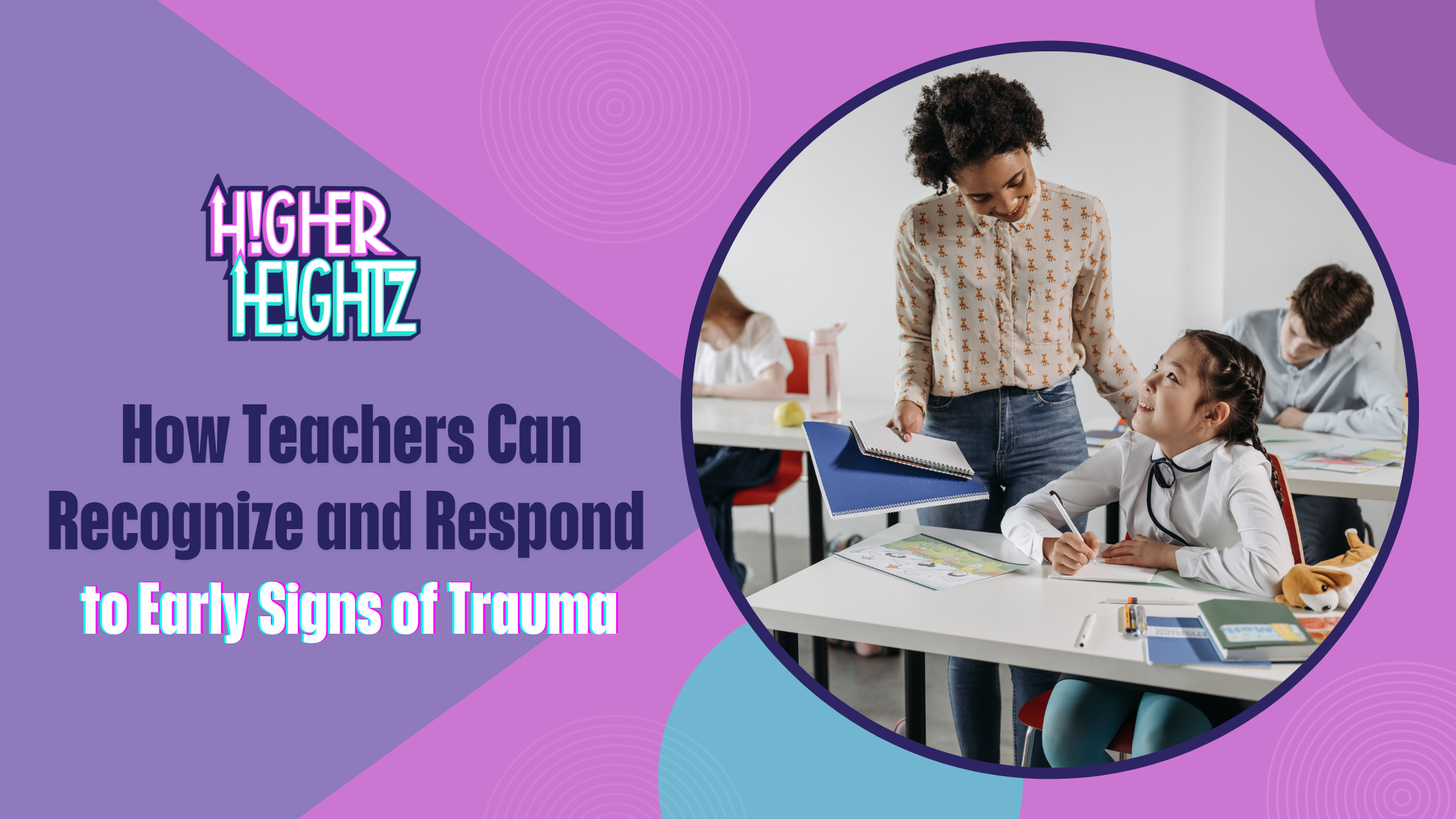
You know your students. You notice when something changes.
The kid who used to participate suddenly goes quiet. The homework stops coming in. Attendance starts becoming spotty.
These changes begin to occur. You start wondering what happens at home or in their lives.
Sometimes it can be a phase but sometimes it’s more.
And because you see these students day after day, you’re usually the first adult to pick up on any patterns that others mightactually miss.
What You Might See
Trauma looks different in every student. There’s no universal sign, but certain behaviors come up often enough to mention.
Some students get angry. Others shut down completely. Some mask it well until they can’t anymore.
Watch for:
- Unexplained slips in grades
- Not able to focus or get work done as well as they used to
- More frequently missing class and withdrawing from friends and activities
- Frequent, quick emotional reactions to minor situations or a dip in mood most days
- Frequent complaints about headaches or stomach pain
- More often feeling or appearing nervous or tensing up about most things
- Behaving in ways that may be young for their age
- Problems falling asleep or becoming tired at the wrong times
- Changes in how much they eat or how they look
The pattern matters more than any single behavior. A bad week happens. A bad month is worth noting. Trust what you’re seeing.
Your Classroom Environment
Students dealing with trauma need stability.
The rest of their world may be chaotic, and your classroom could be the one place that isn’t.
Minor adjustments to how you organize your space and way of interacting have a big impact. Ways to do this include:
A few adjustments help:
- Stick to routines when possible and give advance notice before changes
- Offer choices in assignments, seating, or work partners
- Have a designated quiet spot students can use without asking permission
- Build in regular movement breaks throughout lessons
- Keep your tone steady, especially during difficult moments
- Focus on effort and progress rather than just final results
- Be predictable in your responses and expectations
Nothing here requires extra training or certification. It’s just being intentional about structure and consistency in ways that help all students. Not just those dealing with trauma.
When You’re Concerned
Start by writing down what you notice. Dates and facts only. Then talk to your school counselor or whoever handles student support.
The process:
- Document specific patterns with dates and observable behaviors
- Have a brief, private check-in with the student when appropriate
- Loop in support staff like counselors or social workers
- Contact parents or guardians to share observations
- Follow your school’s established procedures for reporting concerns
- Keep showing up consistently for the student
You’re connecting dots and making referrals, not diagnosing problems. Your observations help get students the support they need.
Your Limits Matter
Supporting struggling students takes energy. You can’t do it endlessly without feeling the effects yourself.
Remember:
- Boundaries make it sustainable
- Colleagues/supervisors can provide perspective
- Some situations call for experts
- You are allowed to be tired or overwhelmed
- Self-care isn’t really an option while doing this work
Consistency counts more than intensity! Students need someone reliable, not someone who burns out trying to do too much.
Let’s Connect
At Higher Heightz, we work with schools to implement trauma-informed approaches that make sense in day-to-day teaching.
We focus on practical training and systems that support students long before problems ever escalate.
We design our programs around what works in real classrooms with real constraints.
So, if your school wants to bolster student support in a way that feels manageable and effective then let’s work out what that looks like for you!
FAQs
How can one differentiate between trauma and normal teenage stuff?
Trauma responses stick around; they impact all aspects of a student’s life. Normal “teenage stuff” changes with the setting.
Should I ask what happened?
Keep it general. “Everything okay?” works. Save the detailed conversations for counselors who have that training.
What if parents react badly?
Stay factual about what you’ve seen at school. Most parents appreciate teachers who care enough to notice.