
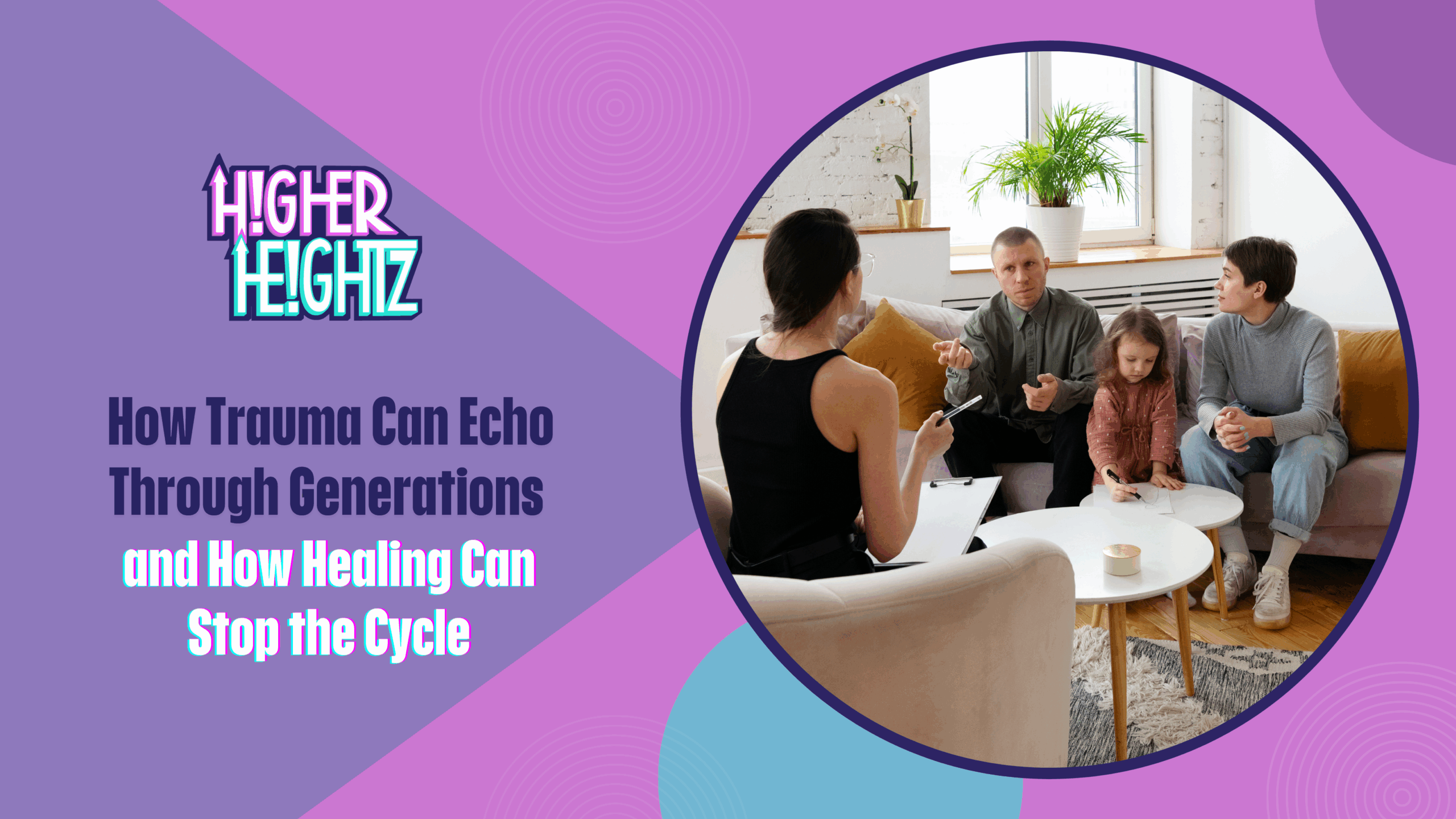
How Trauma Can Echo Through Generations and How Healing Can Stop the Cycle
There’s a certain kind of anxiety that doesn’t match your actual life. The kind where you’re bracing for disaster even though nothing’s going wrong.
Where you parent out of fear your own parents never explained. Where certain emotions feel dangerous to even acknowledge.
You didn’t come up with this stuff on your own. You inherited it.
Trauma moves through families quietly, showing up in reactions that don’t make sense and patterns nobody questions. Until someone finally does.
What Moves Forward Without Anyone Noticing
Trauma simply appears in the way parents respond when something goes wrong, what children grow to avoid and what nobody ever discusses.
Perhaps your parent was never safe when they were a child, so now they dictate everything in a manner that does not make sense.
Or they were raised in a home where expressing emotion equated to being injured, and feelings were simply not the subject of conversation.
The initial issue had passed many years ago, but the reaction to the issue continues to unfold.
No one is doing this deliberately. Parents operate with what they have been provided. The patterns simply continue to roll on until somebody is ready to examine them.
What It Looks Like When Trauma’s Still Running Things
You might see some families where discussions seem very strained. There are some families where everyone walks on eggshells to avoid touching on certain subjects.
Other times it hides better:
- Parents who won’t let teenagers do regular teenage things because something might go wrong, when really they’re just trying to control the things they couldn’t control before.
- Everyone disappears to different rooms when conflict shows up instead of actually dealing with it.
- The same fights and the same distance happen in every generation.
- Kids walking around anxious when nothing in their actual life explains it.
Once you notice these patterns, you can’t stop seeing them.
Why Stopping It Isn’t Simple
People think that once you see a pattern, you should be able to just quit doing it. That’s not how any of this works.
Generational trauma elicits profound reactions. They don’t feel like choices. They are as though the survival, as though it could not be otherwise.
To alter them is to challenge all that your family thought to be true.
It is also about experiencing emotions that were avoided by the older generations. That is why there was a reason why certain subjects never came up.
Opening them back up takes something a lot of people didn’t have.
And there’s guilt. It might seem like telling your parents they did something wrong just because you are attempting to heal what they failed to.
What Works to Stop It
You won’t be going back to fix the past and change the history of the trauma that got passed down.
You just need to decide what you are okay with carrying and what you are willing to give up.
Get to the root of what’s yours and what was passed down from others.
This may require working with a therapist. It may look like having tough conversations with family who are willing to share.
Sometimes it’s just knowing you are scared of something that you have no history with.
The real changes happen in small and regular moments.
- Catching yourself about to react the old way and stopping long enough to try something different.
- Actually talking to your kids about feelings instead of acting like everything’s always fine.
- Setting boundaries even when it makes people mad.
- Asking for help is preferable to battling through everything alone.
- Saying you are struggling is far better than masking your situation by acting like everything is in order.
- Healing generational trauma often means addressing mental health alongside the emotional patterns passed down within families.
Each one chips away at the silence that keeps trauma moving through families.
What Change Actually Looks Like
You don’t wake up one morning, suddenly free from everything that came before. But things start shifting.
Your kids come to you with problems instead of hiding them. You make it through a fight without completely shutting down.
Family dinners involve actual conversations instead of everyone playing their usual roles.
And you feel it in your body. Less tightness in your chest. More space to just breathe. The feeling that you’re actually living instead of just making it through each day.
That’s when you know something’s different.
Read more: What Actually Happens in a Trauma Recovery Group
It Changes More Than Just Your Family
Every person who works through generational trauma changes what gets passed forward. Your kids won’t inherit what you’re dealing with now.
Their kids won’t carry patterns that started before anyone can remember.
It’s hard work, and it matters. Not perfect, never finished, but actually different.
Higher Heightz works with young people and families dealing with trauma and building healthier patterns. Get in touch if you’re ready to start.